
Nutrition
The Cane Corso should do well on a high-quality dog food, whether commercially manufactured or home-prepared with your veterinarian’s supervision and approval. Any diet should be appropriate to the dog’s age (puppy, adult, or senior). Some dogs are prone to getting overweight, so watch your dog’s calorie consumption and weight level. Treats can be an important aid in training, but giving too many can cause obesity. Learn about which human foods are safe for dogs, and which are not. Check with your vet if you have any concerns about your dog’s weight or diet. Clean, fresh water should be available at all times.
Grooming
The Cane Corso’s coat is short, but double-layered. The undercoat, which varies in length depending on the climate the dog lives in, sheds throughout the year, especially during shedding season in the spring. Weekly brushing—daily during shedding season—with a medium-bristle brush, a rubber grooming mitt or tool, or a hound glove will remove the dead hair before it can fall onto the furniture, and it helps remove dirt and promotes new hair growth as well. As with all breeds, the nails should be trimmed regularly, as overly long nails can be painful to the dog and cause problems walking and running.
Exercise
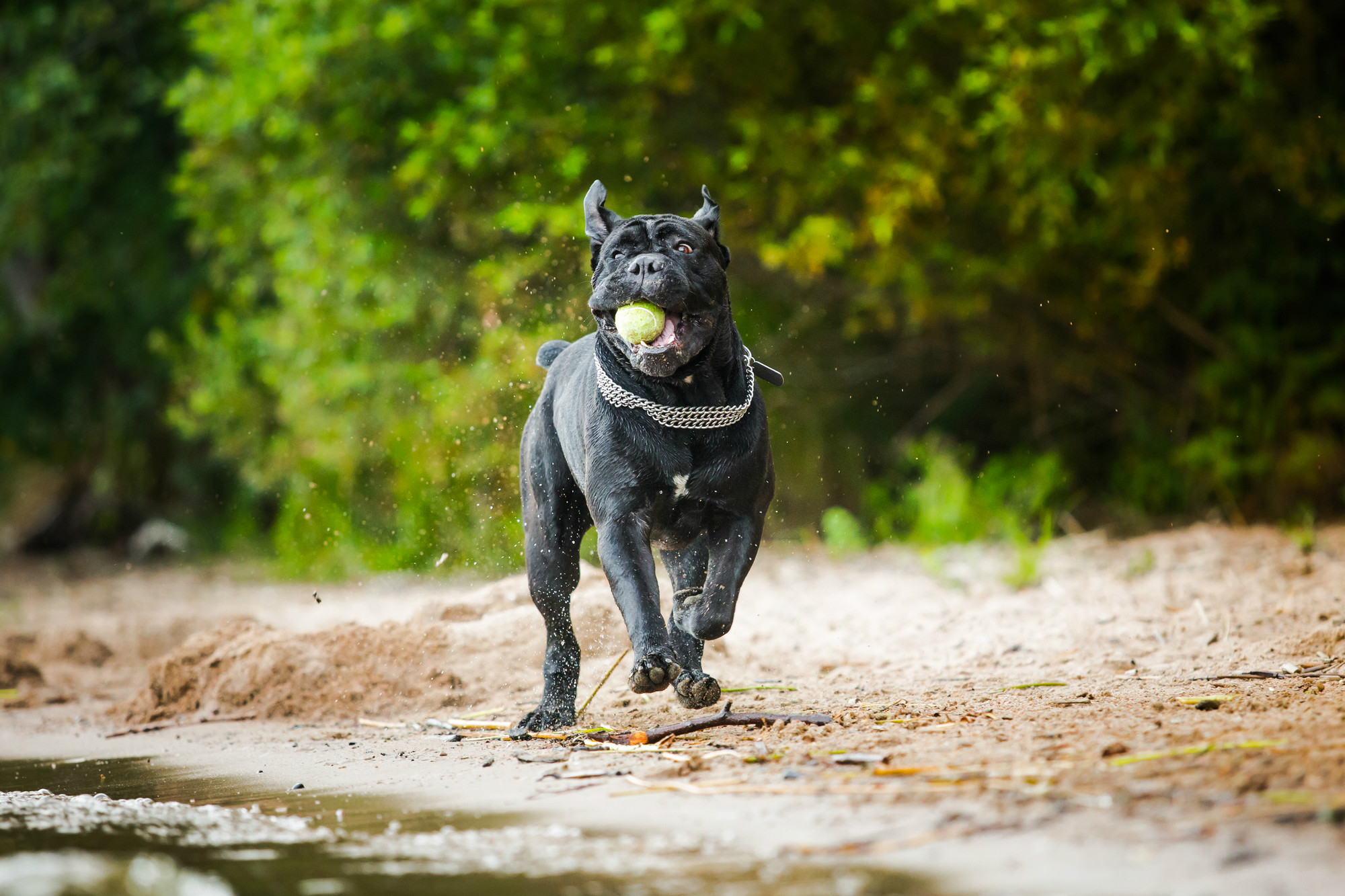
Cane Corsos need serious exercise. A brisk walk—or better yet, run—of at least a mile in the morning and again in the evening will sustain their health and muscle tone. They make great companions on long walks, hikes, or bicycle rides. The Cane Corso was bred to work and is happiest when given a job to do. He needs mental as well as physical stimulation, or undesirable behavior will result. Many Cane Corsos compete in agility, obedience, dock diving, protection sport, and tracking events.
Training
Early socialization and puppy training classes are recommended for all dogs, but for a breed as big and strong as a Cane Corso, they are a must. Many Cane Corsos can be dominant and protective; socialization will help ensure that they grow into well-adjusted, well-mannered adults. Obedience training will keep them from becoming the boss in the household. Cane Corsos are intelligent and eager to please, so they are generally easy to train. Despite their appearance, Cane Corsos are all heart, and respond to love and rewards far better than to harsh corrections or training methods. A Cane Corso puppy is smart and easily trained and will form close bonds with the family. As a natural athlete, it needs lots of exercise. Grooming is easy as their thick coats rarely shed and are completely waterproof.
Health
Cane Corsos are generally healthy dogs and responsible breeders screen their stock for health conditions such as hip dysplasia, idiopathic epilepsy, demodex mange, and eyelid abnormalities.vLarge and deep-chested breeds are susceptible to bloat, a sudden, life-threatening stomach condition. Cane Corso owners should learn what signs to look out for, and what to do should they occur. As with all breeds, a Cane Corso’s ears should be checked regularly for signs of infection, and the teeth should be brushed often, using a toothpaste designed for dogs.
Recommended Health Test from the National Breed Club:
- Hip Evaluation
- Elbow Evaluation
- Cardiac Exam
Some dogs may be faced with these health challenges in their lives, but the majority of Cane Corsi are healthy dogs.
Breed Traits
- Personality: Smart, trainable, and noble of bearing; assertive and confident, Corsi are peerless protectors
- Energy Level: Somewhat Active; Quick, athletic, powerful, these big bruisers enjoy their exercise time
- Good with Children: Better with Supervision
- Good with other Dogs: With Supervision
- Shedding: Seasonal
- Grooming: Occasional
- Trainability: Responds Well
- Height: 25-27.5 inches (male), 23.5-26 inches (female)
- Weight: Proportionate to height
- Life Expectancy: 9-12 years
- Barking Level: Barks When Necessary
Important Note: The Cane Corso is not suitable for people who live inactive lifestyles as Cane Corsos are athletic by nature. It is therefore very important to provide them with a chance to go on long walks regularly. The Corso’s athletic ability, intelligence and protective nature can challenge novice owners or those who are used to softer breeds. As such, the Corso needs an ample amount of training and socialisation from an early age to insure it’s mental and physical health. It should always be kept in mind that Cane Corsos may prove to be hostile to other dogs, especially those of large size and the same sex. A Corso is not likely to start a fight, but he is not likely to run from one, either.


